

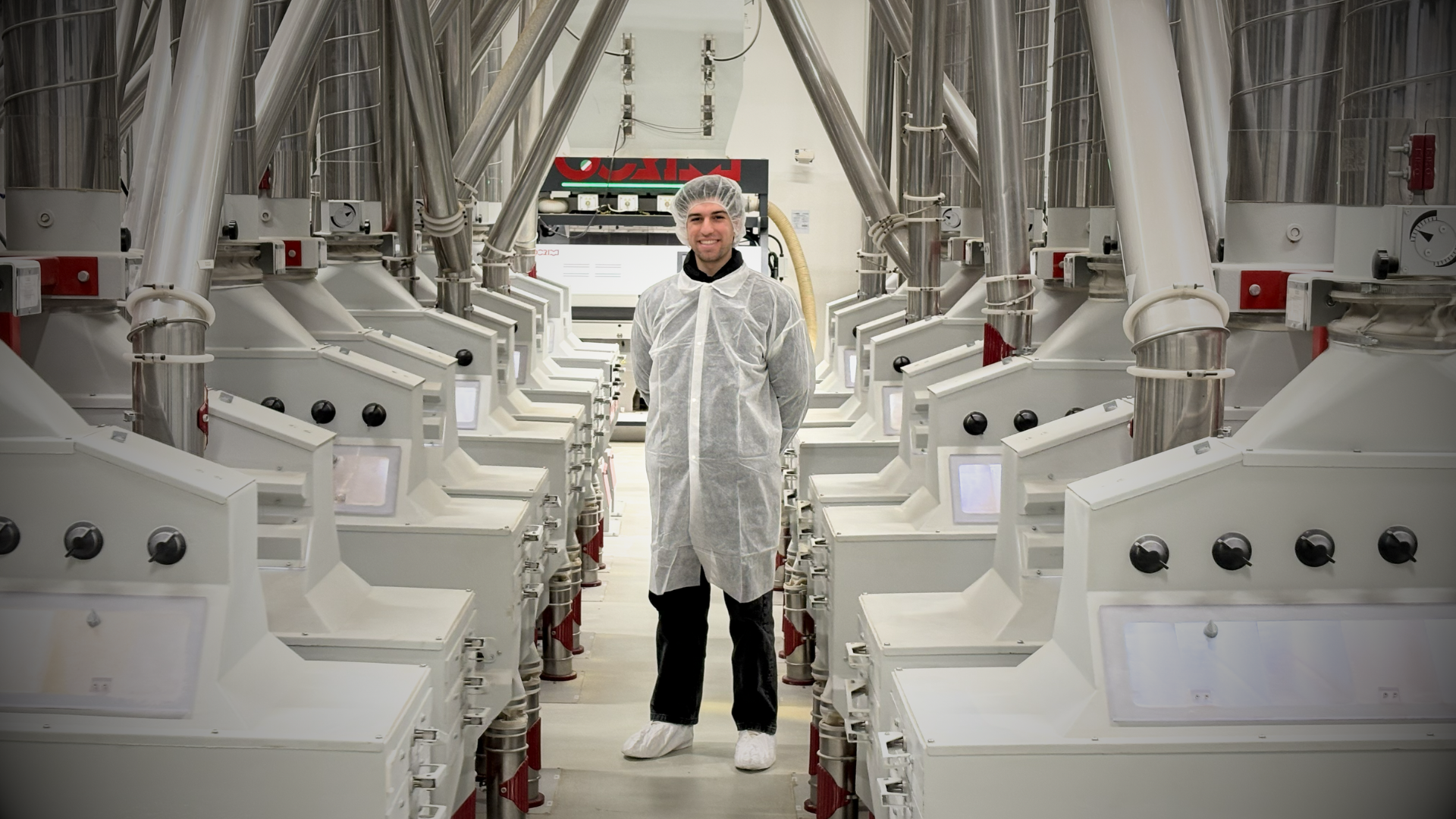
Bringing the academic world closer to business and transforming theory into concrete experience is one of the goals we share by participating in the Agorà project, promoted by the Università Cattolica del Sacro Cuore in Cremona. This initiative fosters dialogue between students, companies, and the local area, creating opportunities for applied training and mutual growth.
Within this context, we find the experience of Lorenzo Balestreri, a student nearing graduation in Food Science and Technology, who completed his curricular internship at the Milling Hub as part of the Agorà program and in preparation for his thesis.
Lorenzo is in his third year of a degree course that combines the foundations of agriculture with a strong focus on the food industry and production processes. When it came time to choose where to carry out the mandatory internship scheduled between the second and third year, our company was the one that best reflected the path he was taking: process analysis, incoming and outgoing product control, and attention to the production environment and efficiency.
Before joining the company, his knowledge of the milling world was primarily theoretical. As is often the case, the mill was imagined as a simple reality, whereas the experience at Milling Hub allowed him to discover a complex and articulated structure, consisting of multiple levels, numerous machines, and strictly interconnected processes. In the initial phase of the internship, Lorenzo was able to dedicate time to an in-depth observation of the plant, understanding its functioning and the various operational phases before seeing them applied in full production activity.
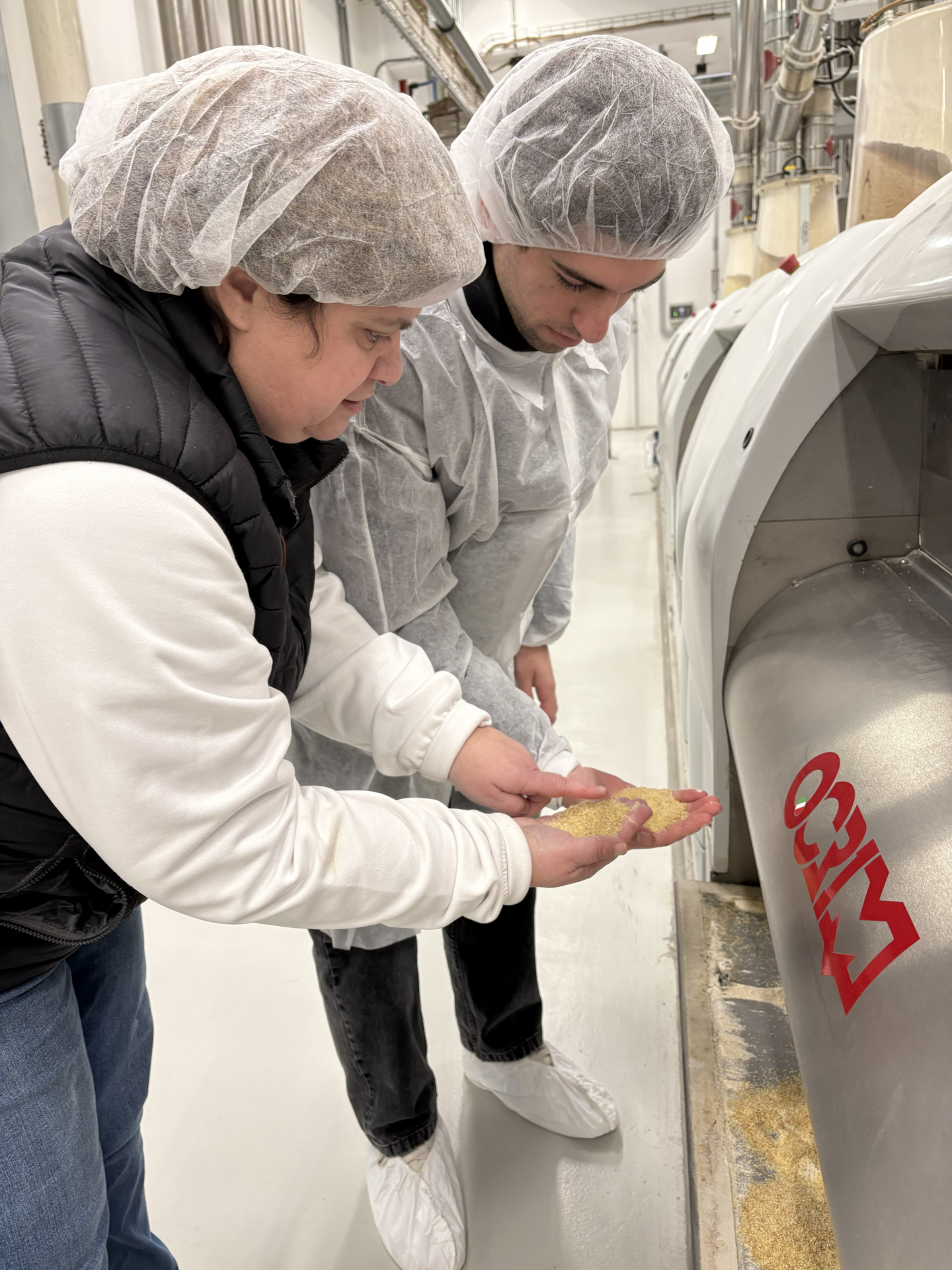
Throughout his internship, Lorenzo was mentored by Simona Digiuni, Production Manager, who guided him step by step through the plant and its activities. Over the months, he worked alongside the Milling Hub team on a wide range of tasks: from understanding production flows to laboratory analyses using NIR technology to monitor parameters such as moisture content, supporting daily operations, and observing the monitoring and control systems in the control room.
One aspect that particularly impressed him was the production of durum wheat semolina, the core of the Milling Hub’s activity. The process proved to be far more sophisticated than expected, involving multiple stages, precise adjustments and constant monitoring, where even small variations can affect yield and final product quality. A clear example of how expertise, experience and technology are essential in modern milling.
Lorenzo’s journey at Ocrim did not end with the internship. He has chosen to dedicate his graduation thesis to the milling process itself, using the Milling Hub as a case study. This outcome further highlights the value of initiatives like Agorà, which create a tangible and meaningful connection between universities and industry.
From our perspective, welcoming students like Lorenzo means investing in the next generation and actively contributing to the training of future professionals in the agri-food sector.
Hands-on experience is a vital step in understanding how the working world truly operates, enriching both personal and professional skills. It is through this ongoing dialogue between knowledge and practice that we continue to shape the future of the milling industry.

